fgfbfvfy[fW,ÖHome
HOME | Japan Catholic News | History of Japanese Catholic Church | 16 Dioceses | Documents | Location Map
What's New
Japan Catholic News
History of the Japanese Catholic Church
16 Dioceses
Documents
Map
to Japanese Page


Articles

BEATIFICATION PROCESS FOR JAPANESE MISSIONARY TO IMMIGRANTS IN BRAZIL

YOUTH MINISTERING TO YOUTH ESSENTIAL FOR CHURCH, BISHOP SAYS

TAKAMATSU BISHOP ANNOUNCES CLOSING OF NEOCATECHUMENAL WAY SEMINARY

CATHOLIC, PROTESTANT SEMINARIANS MEET AT INTER-SEMINARY CONFERENCE

back JCN index home

Japan Catholic News


April 2009


BEATIFICATION PROCESS FOR JAPANESE MISSIONARY TO IMMIGRANTS IN BRAZIL


Promotion of the beatification of Japanese Father Chohachi Nakamura entered a new stage on March 15 when Bishop Benegito Goncalves Dos Santos of the Presidente Prudente diocese issued an ordinance establishing a tribunal for the cause. The task was transferred from the committee for the causes of saints of the National Conference of Bishops of Brazil (CNBB).

At the inauguration held in Álvares Machado the bishop declared that the tribunal was set up at the chancellor's office and the secretarial office at Pastoral Nipo-Brasileira (PANIB). Father Rubens Miraglia Zani, a canon lawyer, has assumed the responsibility to liaise with the Congregation for the Causes of Saints in Rome.

Fr. Nakamura was ordained for the Nagasaki Diocese in 1897. After working as a parish priest in the Kagoshima and Amami areas for 26 years, he volunteered at age 58 to go and help Japanese Catholic immigrants in Brazil in 1923. He worked there for 17 years till he died in Álvares Machado in 1940.

His pastoral life in Brazil was never an easy one, being full of difficulties and inconveniences. His ministry covered and communities scattered in and around Sao Paolo. On foot or on horseback he traveled an area as wide as the whole of Japan, carrying a large trunk filled with bottles of Eucharist wine, a chalice, paten and other items for the Sacraments and services. On his journeys he often slept in the open.

His work consisted of encouraging poor immigrants, providing pastoral care to them and teaching the Christian faith to indigenous people. Seeing him totally dedicating himself to the mission, people began to call him "a living saint."

A Nakamura Memorial Hall was built in Álvares Machado to honor the memory of the priest who became the ideal of a missionary.

To gather momentum for the promotion of Fr. Nakamura's cause, Marianist Father Isao Aoki, the president of PANIB, recommends a book Father Domingos Chohachi Nakamura; Apostle for Japanese Immigrants in Brazil by Pedro Onishi, translated into Japanese by PANIB.

Fr. Aoki said, "To support the beatification you need to know the priest, his personality and virtue. The book will be an introduction for you. We ask you to pray for his beatification."

The tribunal welcomes information about any miraculous sign that is deemed a result of Fr. Nakamura's intercession. Anyone in Japan may call Father Chitoshi Noshita, pastor of the Nakamachi Church in the Nagasaki Archdiocese at 095-823-2484. Fr. Noshita is the official representative of this movement in Japan on behalf of the Catholic Bishops' Conference of Japan.

The book on Fr. Nakamura can be ordered from its publisher, Seibo No Kishi, for ¥1050, telephone 095-824-20080.


YOUTH MINISTERING TO YOUTH ESSENTIAL FOR CHURCH, BISHOP SAYS


In an April 5 interview with the Catholic Weekly, Bishop Kenjiro Koriyama of Kagoshima, chairman of the bishops' conference Committee for the Pastoral Care of Youth, affirmed that "Youth can minister to their peers."

The interview with the bishop, who attended the World Youth Day (WYD) in Sydney in July, 2008, took place following this year's WYD events in Japan.

The bishop said that he found hope in the young. He observed that almost of all the WYD participants received the sacrament of reconciliation. He was moved by the fact that they had "responsive and flexible hearts."

He mentioned that he came to realize by observing them that the young people's prayers focused on how they wanted to work for others as apostles of Jesus. They gathered together and shared consciously that they were pilgrims, and were "ready" to carry out their prayers if there were opportunities.

The bishop said, "There are music ministries that evangelize through hymns. They make friends quickly. It's better for young people to minister to their peers."

Youth who have "rediscovered the value of the faith and moved" have started to make a difference, the bishop said. For example, a young man from Fukuoka who attended WYD organized a meeting for high school students. Then those students, inspired by this meeting, started a gathering for junior high school students. The Network Meeting (NWM), which provides a sort of communal lounge in person and on the Internet for young Catholics and people who support youth ministry, presents the same phenomenon.

However, the bishop added, there are many issues that need to be looked at.

"I think it's a problem that there is no system or base to build up their faith continually even though young people can join in events easily. It would be a waste if a precious opportunity ended up only as a meeting. In order for young people to minister to their peers it's first necessary to educate leaders for youth ministry. However, there is no such a system in the work of the Committee on the Pastoral Care of Youth."

He emphasized the necessity of "a place for formation that functions year-round" since it's very difficult for parishes to carry out this mission on their own.

Moreover, he stressed that clergy and Religious "have failed to get the message across to young people," and pointed out that "ordination does not automatically qualify a priest to minister to youth."

He has provided opportunities where "the youth can review their own faith and express it in their own words." However, he also experienced that meetings ended when he couldn't carry them out anymore. He added based on that experience that a priest does not have to be a leader, but rather an animator who uses his own experiences.

Bishop Koriyama said he is looking into the Fondacio movement which was founded in France to foster youth involvement in the Church and is recognized by the Vatican. According to the bishop, the movement has good programs which value individual experiences of salvation and make the best use of them in order to help youth to live as missionaries of Christ. The Federation of Asian Bishops' Conferences (FABC) encourages the program and Bishop Koriyama examined it last summer.

The bishop said he thinks youth want to hear and see "enthusiasm" in the life of priests. However, seminaries tend to emphasize academics.

The bishop pointed out that a lot of priests talk about salvation but "have little experience of it." He also said that the Japanese Catholic Church does not see the necessity of formation of priests who support youth ministering to youth.

He has called for priests in Kyushu to build a base for the formation of leaders of youth, and plans to send some of Kagoshima's diocesan seminarians to take part in Fondacio this year. The bishop said he hopes to build a system for formation while introducing the Fondacio programs at the same time.

TAKAMATSU BISHOP ANNOUNCES CLOSING OF NEOCATECHUMENAL WAY SEMINARY

In a March 7 Lenten message to his diocese, Takamatsu Bishop Osamu Mizobe formally announced the closing of the much disputed international mission seminary Redemptoris Mater conducted by the NeoCatechumenal Way. He called on the faithful of Takamatsu for cooperation in executing the decision. The formal announcement was the latest step in a long controversy.

In Oct. 2007, after the diocesan advisory board declared its intention to close the Takamatsu school, the Vatican conducted further investigation. After complicated negotiations, in June of last year Vatican Secretary of State Cardinal Tarcisio Bertone announced Rome's decision in a letter.

According to the cardinal's message, the seminary would be closed as a diocesan institute and would be moved to Rome. Finally, a delegate would be sent by the Congregation for the Evangelization of Peoples to confer with the priests of the NeoCatechumenal Way who would be affected by the decision.

Thereafter, the Takamatsu diocese engaged in the necessary legal steps to close the school, following guidelines of Japan's Ministry of Education, Culture, Sports, Science and Technology. As the last step in this procedure, the diocese made an official public report of its proceedings in the middle of February. It stated that the land and buildings set aside for the seminary would not be used for theological training. However, the diocese will retain ownership of the assets.

The seminarians and faculty not directly tied to the Takamatsu diocese transferred to Rome in the fall of last year.

Concerning the NeoCatechumenal Way's continuing disagreement with the decision, Bishop Mizobe said, "Justice isn't something that changes itself depending on the situation or time. When division occurs within and control is lost, there is no other way than leaving it up to the bishop's judgment."

In the wake of the controversy, the bishop made clear his desire that both priests and parishioners undergo a radical change of thinking. Emphasizing the strong bonds between a bishop and his priests, Bishop Mizobe sent out a call for a renewal of harmony.

"The people of the diocese need to come together with an attitude of consideration for parishes, districts and the diocese," he said.

The bishop also referred to the "nursery" state in which European and American missionaries established churches and influence in regions new to Christianity. He announced Takamatsu's "graduation" from the nursery.

"Now that we no longer have a seminary, the thing I most want people to realize is that it's OK to have small parishes in a small diocese. It's something that we can use our own hands to make. By 'we' I mean all the faithful that live in the diocese, everyone as individuals," he said.

Bishop Mizobe addressed the youth and the priests of the diocese directly, urging them to accept the decision as confirmed by the Vatican.

The letter contained a clear warning to the leadership of the NeoCatechumenal Way. Bishop Mizobe urged them to consider the needs of the diocese before their own agenda, to follow the will of the local bishop and specifically forbade them to continue their custom of celebrating their own Holy Week services apart from the rest of the local Church.

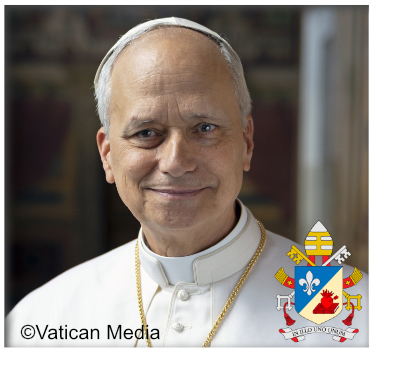
After half a year of waiting, the Congregation for the Evangelization of Peoples decided on Francisco de Javier Sotil Vaios Espiriceta as delegate. His trip to Japan was announced for March 10-25, with visits to the areas in which priests associated with the NeoCatechumenal Way are working.

CATHOLIC, PROTESTANT SEMINARIANS MEET AT INTER-SEMINARY CONFERENCE


An ecumenical program for seminarians, the Inter-Seminarian Meeting (ISM), held its first gathering March 9-11 at the convent of the Community of Nazareth Japan (CNJ) of the Anglican-Episcopal Church of Japan (AECJ), in Mitaka City of Tokyo.

The organizing of the ISM was recommended by veterans of Inter-Seminary Conference (ISC), a similar ecumenical movement that was active some 40 years ago. Senior ISC members approached the Japan Christian Academy Kanto (Tokyo) Office for a new conference. The academy's director Xue Enfeng accepted the idea and raised funds and provided accommodations, meals and other necessary facilities free, except for the participants' travel expenses.

Hiro Sekita, professor emeritus of Aoyama Gakuin University and a minister of the United Church of Christ in Japan (UCCJ) presided over the session.

The program featured a talk by Sasagu Arai, professor emeritus of Keisen University, titled "Faith and the theology of New Testament - my personal history." In addition, the program included visits to Catholic and Protestant seminaries and attendance at a service at the CNJ convent.

Invitations to participate were sent to seven seminaries: Doshisha School of Theology in Kyoto (UCCJ), Kansei Gakuin University School of Theology in Hyogo (UCCJ), Japan Biblical Theological Seminary in Tokyo (UCCJ), Japan Lutheran Theological Seminary in Tokyo, Seinan Gakuin University Department of Theology (Japan Baptist Convention) in Fukuoka, Central Theological College in Tokyo (AECJ) and the Japan Catholic Seminary in Tokyo. Each sent two seminarians. All were in their 30s or 40s.

Some of the seminarians were at first wary that they might wind up in and atmosphere of hostile or apologetic debates.

An AECJ representative said that though he had come armed with defensive as well as offensive arguments on behalf of his Church, what he actually came across was an awareness of matters common among the participants, for instance the decreasing population of young people and the resulting anxiety of older followers of Christ.

The dialogues focused on common points rather than differences, contrary to participants' apprehensions before the gathering. The meeting went further to discuss the possibility of mutual collaboration.

A Catholic seminarian, Takeshi Miyauchi, said that it was important not only to change, but also to be changed. Yasutaka Yoshioka from Doshisha said that since meeting in person and talking face to face seemed the key, Churches should set up more such meetings.

Another seminarian said that he appreciated the meeting, as he came to know future clergy of other denominations. There was also recognition, however, that disputes should not be precluded.

Celibacy drew a variety of opinions. The Catholic seminarians stressed that since it was purely a gift of God, they only left it to God.

In closing, participants agreed to hold a second ISM and elected members to do the preparation.


back JCN index home
©Catholic Bishops' Conference of Japan